
Thematic Focus | Governance, Rule of Law & Civil Society
This thematic area focuses on evaluating programs that strengthen governance, justice, and civil society initiatives to promote accountability, transparency, and citizen trust. The evaluations examine how inclusive governance and evidence-based reforms advance institutional resilience and democratic participation across Central Asia, Eastern Europe, and the Caucasus.
Uzbekistan | Legal Reform Program Evaluation (2022-2023)
Commissioner: U.S. Agency for International Development (USAID/Uzbekistan)
Contractor: Social Impact, Inc.
Role: Team Lead / Senior Evaluation Specialist
Led the external performance evaluation of the Uzbekistan Legal Reform Program, assessing progress in strengthening legal institutions, rule of law, and access to justice. Guided the design and implementation of a mixed-methods evaluation, including a preliminary desk review, co-creation meetings, and development of data collection tools. Oversaw remote and in-person data collection, analysis, and synthesis of findings. Facilitated stakeholder briefings and produced the final evaluation report with actionable recommendations for enhancing program impact and sustainability.
Evaluation Findings Summary: The evaluation found that the Legal Reform Program contributed to advancing judicial reform, improving legal awareness, and strengthening collaboration between civil society and state institutions. Pilot initiatives—such as legal clinics and court modernization efforts—demonstrated effective models of citizen-centered justice. However, limited legislative autonomy and uneven implementation at the local level constrained long-term sustainability. Recommendations emphasized reinforcing government ownership, expanding citizen outreach, and improving coordination among reform stakeholders.
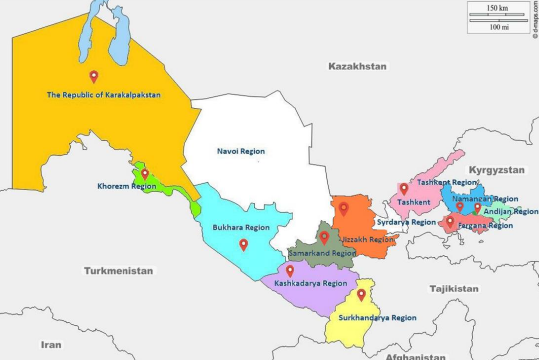
Map showing Legal Reform Program sub-grantee coverage across Uzbekistan.
Source: Legal Reform Program (LRP); sub-grantee coverage data
Moldova | Accountability in Moldova WHOLE Evaluation (2019–2020)
Commissioner: USAID/Moldova
Contractor: Social Impact, Inc.
Role: Evaluation Specialist
Led the rule of law sub-team and contributed to evaluation methodology design. Developed the data collection strategy and KII/FGD instruments; conducted field interviews and focus groups; coded, synthesized, and analyzed data; presented preliminary findings; and co-authored the justice system section examining technology-enabled transparency and accountability, with actionable recommendations.
Evaluation Findings Summary: The evaluation examined how governance and accountability initiatives in Moldova strengthened rule of law, civic participation, and institutional transparency. Findings highlighted progress in judicial openness and access to legal information through digital tools and participatory mechanisms. Ongoing challenges included uneven institutional capacity, political constraints, and limited sustainability. Recommendations emphasized strengthening government–civil society collaboration, scaling e-governance solutions, and investing in long-term capacity building to consolidate gains.
Georgia | Advancing CSO Capacities and Engaging Society for Sustainability (ACCESS) Project Evaluation (2020–2021)
Commissioner: USAID/Georgia
Contractor: National Opinion Research Center (NORC)
Role: Evaluation Consultant
Contributed to the USAID performance evaluation of the ACCESS project, which aimed to strengthen civil society and promote citizen engagement in governance. Conducted a desk review, supported the design of qualitative and quantitative data collection tools, and contributed to drafting and finalizing the evaluation report.
Evaluation Findings Summary: The evaluation found that ACCESS strengthened CSO advocacy skills, improved collaboration with media and government institutions, and expanded civic oversight of reforms. Regional outreach increased, and small grants supported innovative community-level initiatives. Key challenges included limited financial sustainability and continued dependence on donor funding. Recommendations focused on fostering local resource mobilization, expanding partnerships, and enhancing mechanisms for citizen feedback and accountability.

Kyrgyzstan | End-of-Phase Evaluation of the Strengthening Voice and Accountability and Public Service Improvement Projects (2018)
Commissioner: Swiss Agency for Development and Cooperation (SDC)
Contractor: Nordic Consulting Group
Role: Evaluation Team Leader
Led the end-of-phase evaluation of two interlinked SDC governance programs—Strengthening Voice and Accountability and Public Service Improvement—focused on citizen participation, local governance, and service delivery. Designed the evaluation plan and methodology, led qualitative data collection across five regions and two cities, managed a multinational evaluation team, and synthesized findings to inform SDC’s strategic planning and future program design.
Evaluation Findings Summary: The evaluation found that both programs effectively increased citizen participation in local decision-making, improved transparency in municipal service delivery, and strengthened the responsiveness of local authorities. Key achievements included participatory budgeting and mechanisms for citizen oversight. Challenges remained in institutionalizing accountability and ensuring equitable participation across regions. Recommendations emphasized deepening decentralization reforms, expanding capacity-building for local officials, and sustaining citizen engagement beyond project cycles.
Central Asia | UN Sub-Regional Seminar on Minority Rights (2004)
Commissioner: Office of the United Nations High Commissioner for Human Rights (OHCHR)
Role: Vice-Chairperson
Served as Vice-Chairperson of the UN Sub-Regional Seminar on Minority Rights: Cultural Diversity and Development in Central Asia. Supported facilitation of discussions with minority representatives, civil society leaders, and government officials from across the region, and co-led the drafting of the seminar’s conclusions and recommendations. The seminar’s outputs contributed to subsequent UN human rights work and informed the UNDP Marginalised Minorities in Development Programming: Resource Guide and Toolkit (2010), strengthening global guidance on minority rights and inclusive development.
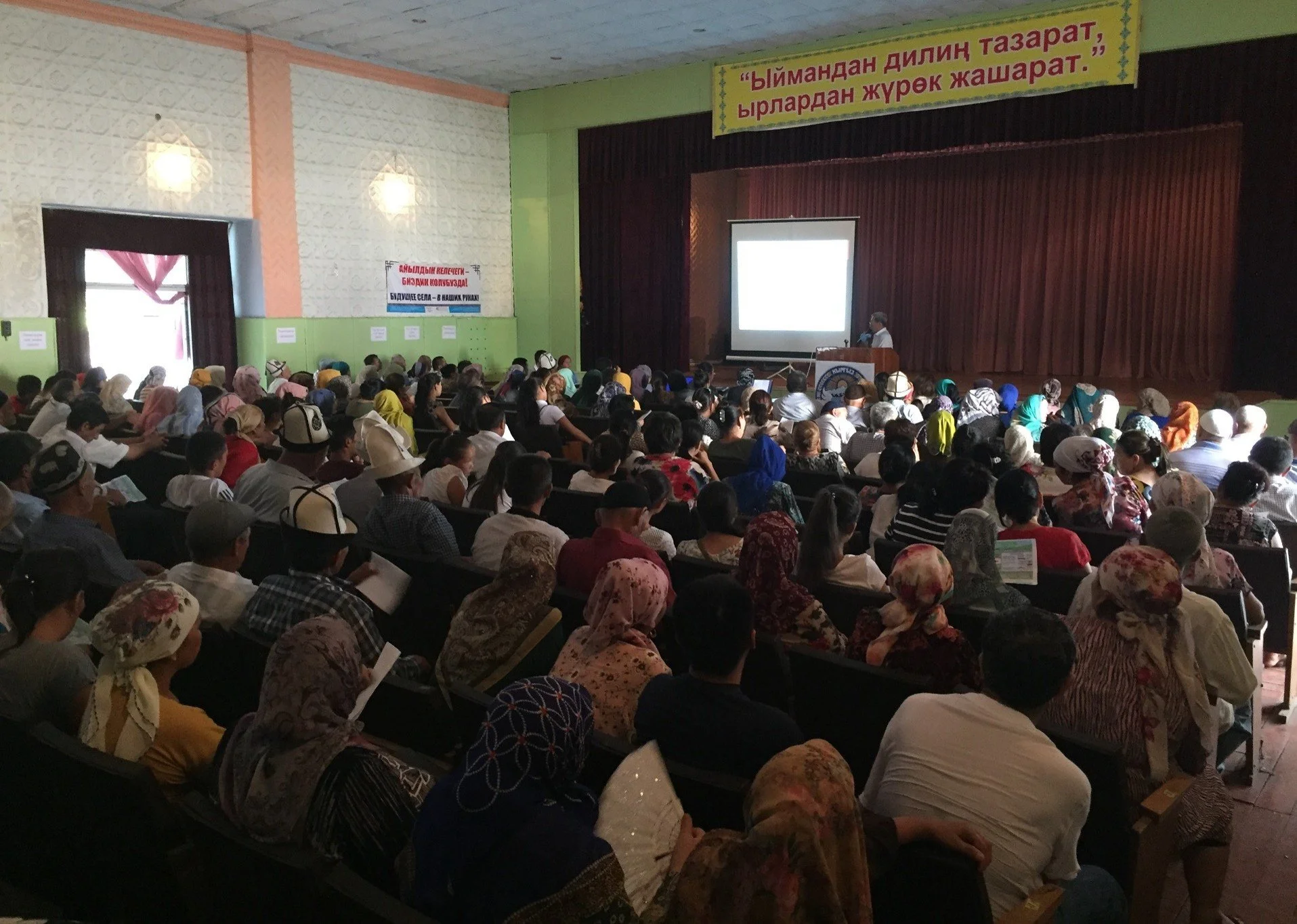
Public hearing in Kara-Suu region, Osh